
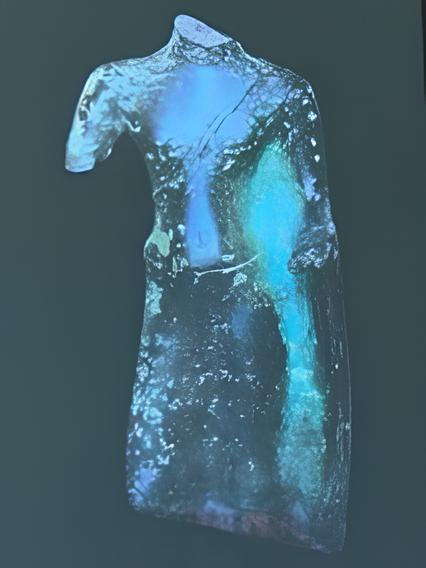
“This is a bronze Buddha statue. Judging by it form and from iconographic point of view, art expert conclude that it was created in the 7th or 8th century in the pre- Angkorean period. It was originated from Wat Banan, Banan district, Battambang province. Initially it was kept by the abbots, but later he gave it to the French authorities and it was presented by Henri Parmentier and registered into the collection of the National Museum on the 17th of February 1921. This is the statue which from design was deem practical and easy for people to transport from one place to another.
It’s difficult to determinedly original places manufacture within Cambodia or it was brought from elsewhere. Small works of this size played a very important role in spreading religious iconography throughout Southeast Asia. There are many examples of statues being imported or replicated from India and use for worship in Cambodia. This statue also serves as proof of the sea trade between India and Southeast Asia that began to flourish in the first century CE. The statue has a slender figure. The right shoulder and right hand are exposed as the robe one on the left, which was characteristic of the Amravati style that emerged in the 6th century. The transparent robe which appears to covered the body in the film is characteristic of Buddhist art, from Andhra Pradesh India between the 7th and 8th centuries.
This statue from Wat Banan could have belonged to these two styles and is similar to stone statues found at Angkor Borei. Due to the various damage severe, it is impossible to know whether it is a Theravada or Mahayana statue. But judging by its modest appearance, this statue appears to represent Theravada Buddhism.”