
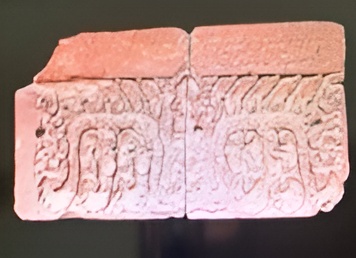
This is a sandstone lintel. It was brought from Prey Veng Province to displayed as part of the collection of the National Museum of Cambodia in the Bapuon style. It was made in the 11th century during the reign of King Udayadichawarman II, from the year 1050 to 1066 CE. The decoration and carving styles are very elaborate and intricate.
Indicates care and dedication on the part of the artists. In the center is the head is Rahu’s, swallowing or spitting out a flora stem. Its hands grasp the stem at one end, the stem curves out like a bow and each end a carved with four dangling flower pendants.
Above Rahu, a deity figure carved in a niche poses in a dance gesture in aspects of Khmer architecture, lintels are almost always made of sandstone. They are usually sculpted carved in rectangular shapes to decorate gateways, doors, or false doors of a temple. Besides being a decorative element, they also serve a very important function: to help support the weight of the monument.