
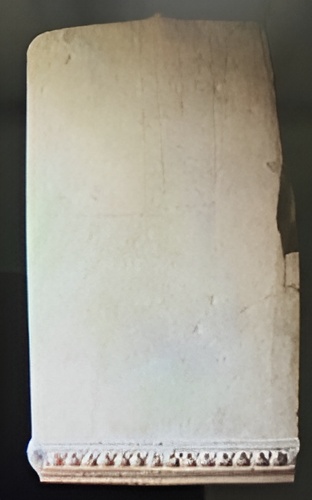
This is an inscription made of sandstone. It originated from Pre Rup temple in Siem Reap Province. It was found in 1934 in a pavilion at the northeast side of the temple and later transfer for storage in the collection of the National Museum of Cambodia.
Khmer experts has determined this stele was inscribed between 961 and 962 CE, of the Angkorian period, during the reign of King Rajendravarman, who reign from the year 944 to 968 CE.
Each side of the stela has 66 lines of characters of Sanskrit. In total, there are 132 lines of text, making the longest Sanskrit inscription from ancient time. The inscription is a poem commission by King Rajendravarman, which also reflected on a literary masterpiece by the ancient Khmer people.
The text begins with a reference to the worship of Shiva and Vishnu, it continues on praise the king, the Khmer ancestors, and their achievements in building the Pre Rup temple, and also of religious affairs. King Rajendravarman had commissioned the construction of statues in the five towers of the temple between 961 and 962. One statue was erected in the central tower and others four in each of the four towers at each corner of the temple.
A Linga of Shiva named Rajendra Patreisvara in accompanied of two Shiva figures is erected in the main tower. The other statues in the main tower are the figures of Vishnu and a female deity.
The inscription ends with a reminder for kings and the following generations to defend dharma, especially at the Pre Rup temple that King Rajendravarman had built. It says, if dharma falls into a state of calamity when the king pretends to be asleep while in fact he is enjoy his time with a woman, may you be awakened from your sleep to go to the rescue of this dharma, just the lord Vishnu sleeps on the ocean of milk, in order to rescue dharma from annihilation.