
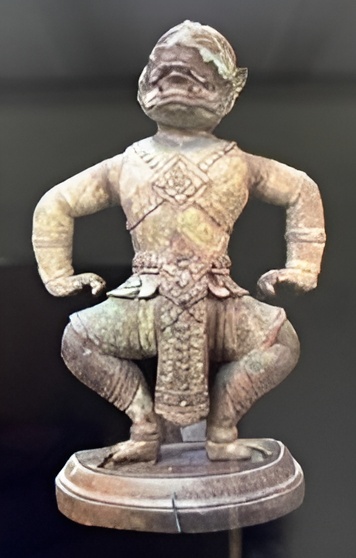
“This is a wooden Hanuman or Monkey statue with the lacquer coding measures 96 centimeters high. It is one of the earlies members of the collection at the National Museum. Unfortunately, its origin remains unclear due to a lack of supporting documentation. It was believed to have been carved in the late 19th or early 20th century.
Hanuman is a white monkey and the most favorite soldier of Rama in the well-known Indian mythology of the Ramayana. The Khmer were drawn to the story since the early days of the arrival of Indian influences in the 6th and 7th centuries during the time of the Phnom Da style. It is recorded in the memory of ordinary Cambodian, especially those living in the countryside.
To them, Hanuman is a mischievous figure typical of any monkey, but it is also a do-good character, tasked with the mission to protect Rama. He is the leading fighter in the battle to liberate Sita the wife of Rama from the Yaksa.
This Hanuman figure is considered to be in the new generation of art. This figure could be an imitation of a character of a form from the Lakhon Khol a type of Khmer theater. This can be seen by the way it is sculpted and by the decorative elements that adorn it, this includes the theatrical gesture, dress, cross-chest jewelry and face mask. The feet are crafted to appear natural, showing long paws that real monkey would possess.