
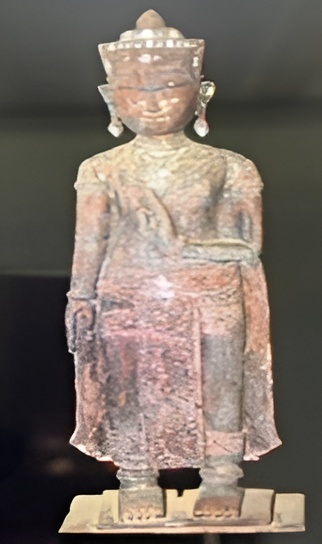
“This is an Adorned Buddha made of lacquered wood. It is 86.4 centimeters high. It originated from Slaket Pagoda in the Leat district, Pursat Province, from where it was transferred in 1975 to the National Museum for registration into the collection.
Experts believe it was made in the 17th or 18th century of the post-Angkorian period. As part of the continuing traditions of the 15th and 16th centuries. Artist of the late Middle Ages, sometimes chose to inlays other materials in the statue as decoration. With his left arm kept parallel with the body, and his right arm raised at the chest. Buddha’s gestures to try calm an elephant named Nielkiri decorated with the snail motifs he wears a crown on his head and a neckband.
The robe shows two folds dropping in front between both legs, accompanied by drapery. This characteristic shows the continuing practices of the art traditions from the Angkorian period. Previously, this statue was installed at the floor of the thousand Buddha figures at Angkor Wat, as part of the shift of society at the time from worshiping Brahmanism and Mahayana Buddhism to Theravada Buddhism.
In the post-Angkorian period, contraction of gigantic monuments and stone statue shift they were replaced by the creation of wooden Buddha statue of Gautama. Angkor Wat during the 16th century were transformed into the Theravada Buddhist center the large Buddha’s Wat for followers from near and far to take part and pilgrimages. In practicing the new faith both kings and Buddhist pilgrim brought Buddha statue to keep at the temple. The number kept increasing to the point that this gallery becomes known as the floor of the thousand Buddha figures. This is one of these images and example of the art of the middle ages when work was mostly made of wood.