
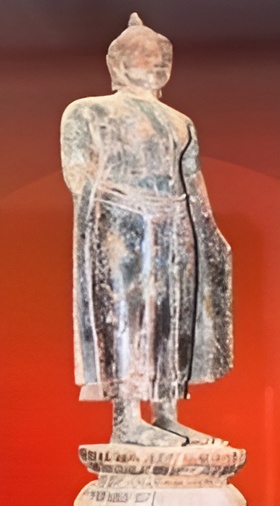
“This is a standing Buddha statue made of lacquered wood. Its origin in Angkor Wat in Siem Reap Province, from where it was transferred in 1952 to be included in the collection of the National Museum of Cambodia. Previously, this statue was installed at the floor of the thousands of Buddha figures at Angkor Wat as part of the shift of the society of the time from worshipping Brahmanism and Mahayana Buddhism to Theravada Buddhism.
In the post-Angkorian period, construction of gigantic of monuments and stone statues ceased they were replaced by the creation of wooden Buddha statues of Gautama.
Angkor Wat during the 16th century, was transformed into the Theravada Buddhism center, a large Buddhist wat for followers from near and far to take part in pilgrimages. In practicing their new faith, both kings and Buddhist pilgrims brought wooden Buddha statues to keep at the temple. The number kept increasing to the point that this gallery became known as the floor of thousand Buddha Statues.
This is one of these images, and an example of the art of the Middle Ages, when works were mostly made of wood. Both forearms are missing. But almost certainly they were in the Abhaya Mudra gesture, which means welcoming, fearlessness, and compassion. The face of Buddha wears a calm and slight smile. He is covered in a robe from his shoulders down to above the ankles. It is likely this image follows the Bayon style of the Angkorian period./.”